

Showing posts with label Wilderness First Aid. Show all posts
Showing posts with label Wilderness First Aid. Show all posts
Monday, June 9, 2014


Saturday, June 7, 2014

Sunday, April 20, 2014


Saturday, April 12, 2014

Friday, April 4, 2014

Saturday, March 29, 2014

Wednesday, March 19, 2014

Saturday, March 15, 2014

Friday, January 31, 2014
Frostbite—To Thaw or Not to Thaw, by Tod Schimelpfenig, NOLS Wilderness Medical Institute
 |
| Frostbitten toes. (Photo courtesy of Dr. S. Falz, WikiMedia.org) |
This is a practical and real question. Thirty-four years ago I spent a night in a tent with my toes frozen, then walked 6 miles and traveled another 25 to a hospital. I know this situation first hand, or first foot as it were.
As so often happens in medicine, there is no easy answer. At every step of the way there are risks and benefits. What do we need to consider when making this decision?
If your feet are frozen, there are often accompanying issues of hypothermia, exhaustion, and dehydration that make walking unlikely. If you thaw a frozen foot in the field it’s hard to imagine walking. If you thaw a frozen toe or toes, you might be able to walk. Let’s talk about this scenario.
The benefit to frozen toes is the ability to walk. The risk is that the longer tissue is frozen, the worse the injury. Medicine can't give an exact timeline to help with this decision.
Practically speaking, keeping toes frozen is a challenge. It's likely your toes will slowly thaw overnight, especially if you can get inside shelter with clothing, sleeping bag, warm food and drink.
The benefit to rapid thawing in warm water, the treatment of choice, is that it gives the best chance for saving tissue. However, thawed toes often hurt and swell, and you put your toes at risk for a freeze-thaw-freeze injury, which is very likely to increase tissue loss.
Rapid thawing in warm water is easy to talk about in a classroom, but difficult to do in the backcountry. If you think your toes will thaw slowly, it’s better to “get er done” quickly. Hopefully, if warm water immersion isn't practical, your companion will donate their armpits or belly, which can work for thawing fingers and toes.
We weigh all these considerations—some factors we’re sure of, others that are probable, but not certain—and we make the decision.
In my case, it was desperately cold (minus 30F). I did sit up all night, and I kept my toes cold as I read Bradford's Washburn's classic frostbite pamphlet. It wasn’t fun, but it worked. My frozen toes, which still fit in my boots, began to thaw as I hiked out the next morning, but they were essentially still frozen at arrival in the hospital.
I think I was lucky.
The Wilderness Medical Society has released a position paper on frostbite. One of the points they made refers to the decision of "to thaw or not to thaw." Partial or full-thickness injury is ideally thawed in a warm water bath at 99-102°F (37-39°C). However, in the backcountry, skin-to-skin contact might be most practical. If this is not possible, spontaneous or slow thawing may be unavoidable and should be allowed. Don't purposely keep tissue frozen for extended periods of time. Read the entire paper at:
"Wilderness Medical Society Practice Guidelines for the Prevention and Treatment of Frostbite," by Scott E. McIntosh, MD, MPH; Matthew Hamonko, MD, MPH; Luanne Freer, MD; Colin K. Grissom, MD; Paul S. Auerbach, MD, MS; George W. Rodway, PhD, APRN; Amalia Cochran, MD; Gordon Giesbrecht, MD; Marion McDevitt, DO; Christopher H. Imray, MD; Eric Johnson, MD; Jennifer Dow, MD; and Peter H. Hackett, MD. Wilderness & Environmental Medicine (Volume 22, Issue 2), Pages 156-166, June 2011.
Source: This article was adapted from Frostbite—To Thaw or Not to Thaw, by Tod Schimelpfenig, EMT, FAWM, Curriculum Director, Wilderness Medicine Institute (WMI), National Outdoor Leadership School (NOLS). Copyright © 2014 by the National Outdoor Leadership School (NOLS), Lander, Wyoming. All Rights Reserved. Excerpted with Expressed Written Permission. To learn more about WMI and NOLS, point your Internet browser here.

Saturday, January 18, 2014
Wilderness First Aid—Is it helpful to put a warm person into a sleeping bag with a cold, hypothermic person? By Tod Schimelpfenig, NOLS Wilderness Medical Institute
 |
| Photo credit: © Josh Whitmore/NOLS |
Actually, snuggling may not be the best word, because putting aside the giggles this conversation elicits in some audiences it’s not easy to hug a physically cold person and the snuggling is a necessary task, not a recreational experience.
But, that’s not what I want to write about. I want to discuss whether it’s helpful to put a warm person into a sleeping bag with a cold person.
Body-to-body warming hasn’t seen much research. It seems the technology of heaters and forced air warming is more attractive. The research we found says it doesn’t help much, and it probably doesn’t harm. [1] [2]
According to Gordon Giesbrecht an adult cooled to 95 degrees F (34.7 degrees C), the common threshold for hypothermia definitions, can have a profound caloric deficit. [2] A healthy adult at rest will make about 1kcal of heat per kg of body weight per hour. This won’t be enough to quickly reverse significant hypothermia. In those tales where we got in a sleeping bag and heroically warmed the severely cold person — well — we may have done the patient a favor, but they probably were not very cold in the first place.
 |
| Photo: Marcio Paes Baretto, Wyss Wilderness Medicine Campus |
According to Dr Giesbrecht [3] the transfer of the energy to the core will be blunted by vasoconstriction. Since most of our mildly hypothermic patients are not dramatically vasoconstricted, this will be only a small hindrance. In severely hypothermic patients it may be a significant limitation to the heat transfer from donor to recipient.
We know that shivering is a powerful means, indeed our best wilderness tool to produce heat in a person with the energy reserves to shiver. We also know that warming the skin blunts the shivering response. We don’t know the significance of the shivering inhibition from warming skin because, even if the patient shivers less, they feel more comfortable and preserve their energy reserves (e.g. they burn fewer calories shivering).
There is concern the donor may become hypothermic. I’ve seen heat donors realize this isn’t a lot of fun, but in the real world, and in the research, the donors don’t become hypothermic.
What are the positives of putting another person in the bag?
- It may provide comfort for the patient to snuggle with another person.
- You can monitor the patient closely.
- You may help the patient warm while they expend fewer calories shivering.
- If the patient is unable to shiver, perhaps they are severely cold, metabolically exhausted, or unable to shiver, the second person in the bag may at least warm the insulation, the thermos bottle of the hypo wrap, and help keep the patient from cooling further, a very important goal.
- You may not be able to fit the heat donor in the bag and still close the opening tightly. This may reduce the effectiveness of the hypo wrap.
- If you plan on carrying the patient with the heat donor inside you’ll have the weight of two to manage.
- The donor may jostle the severely cold patient, who we want to treat as gently as possible.
- The heat donor is not on the surface doing important tasks such as building a fire, making sure your companions are also not hypothermic, or preparing shelter, hot drinks and food.
- When the heat donor has tired of being in the wrap and wants out the nice cocoon has to be opened.
What should we do?
Most of our “hypothermic” patients in the wilderness are not hypothermic in a medical sense, that is, they are warmer than 95F (34.7C).
The people we think of as hypothermic are cold challenged, cold stressed, cold and unhappy. However, our world is not the controlled hospital environment. This situation gets our immediate attention. We’ll attend to the cold person promptly, and if they are healthy, we’ll warm them by removing them from the cold stress, placing them in dry clothing and dry insulation, such as a sleeping bag, and feeding and hydrating them. Their internal metabolic fires, shivering, and our tender loving care will warm their heart, and their body.
People who are truly hypothermic are dangerously ill. They may be wasted (a non-medical term that says they are fatigued, dehydrated and low on food reserves), or have a serious simultaneous medical condition. We may not be able to warm these people in the backcountry. Our efforts are focused on stabilizing the patient; we don’t want to jostle them or allow them to cool further. They likely will only warm in the hospital, so we transport them gently.
I’ve been told two people in a sleeping bag to treat hypothermia is the “standard of care” in the wilderness. Actually, it’s not. The science isn’t strongly in it’s favor and in the wilderness, scenarios are often unique, our equipment less than ideal and our need to improvise real. As always, we’ll use our judgment, understand the principles of treatment and weight the factors in our specific scenario.
The heat sources you have available on your wilderness trip may only be insulated hot water bottles, or the patient’s metabolism and shivering. If you have a good camp and plenty of people you may be able to spare a person to be in the sleeping bag. If you’re a small group, and knowing heat transfer between bodies is not very efficient, you may decide your assistant is best used staring a fire, making a warm meal and drink on the stove, setting up the camp or attending to the other people on your trip.
_______________
1. Harnett RM, O’Brien EM, Sias FR, Pruitt JR. "Initial treatment of profound accidental hypothermia." Aviat Space Environ Med. 1980;51:680–687.
2. Giesbrecht GG, Sessler DI, Mekjavic IB, Schroeder M, Bristow GK. "Treatment of mild immersion hypothermia by direct body-to-body contact." J Appl Physiol. 1994;76: 2373–2379.
3. Hypothermia, Frostbite and other Cold Injuries. 2ed Giesbrecht GG and Wilkerson JA. The Mountaineers. 2007.
Wednesday, December 18, 2013
EMT RipShears—The World's Fastest Trauma Shears

Four tools in one:
- Trauma shear
- Safety knife
- Reflex hammer
- O2 Wrench
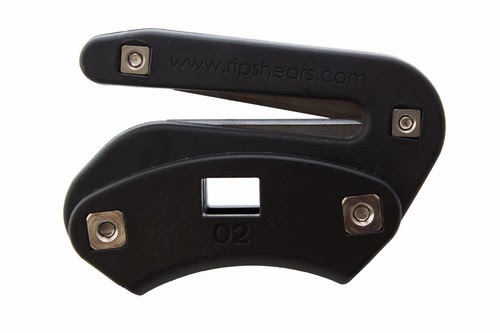 According to the manufacturer, RipShears can slice through turnout gear, combat boots, leather jackets, denim, wet suits, CBR gear, bandages, sport wraps, plastic packaging, seat belts and much more.
The Ripshears Firefly model glows in the dark, and the Ripper unit is sold separately for those wishing to upgrade a pair of standard, 7.25-inch trauma shears.
Learn more about RipSears here.
Source: Soldier Systems Daily
Tuesday, December 17, 2013
Controlling bleeding is often more important than establishing an airway—but what is the best method to do so?
Controlling bleeding is often more important than establishing an airway—but what is the best method to do so? An alternative to the tourniquet: the iTClamp50.


Thursday, December 12, 2013
The Facts & Details About Different Types of Tourniquets


Monday, December 9, 2013
How to tape a sprained—but usable—ankle
How to tape a sprained but usable ankle (video)—courtesy of the National Outdoor Leadership School's (NOLS) Wilderness Medicine Institute (WMI)—with:

- 3 Stirrups
- 3 "J's"
- 3 Figure 8's
Subscribe to:
Posts (Atom)