

Thursday, December 19, 2013
The International Commission For Alpine Rescue (IKAR) has released the long-awaited final video from their 2013 congress in Croatia
Grab a cup of coffee (or two) and check out the 56-minute final video from the 2013 IKAR-CISA (International Commission For Alpine Rescue) Congress that was held in Croatia. It was hosted by the Croatian Mountain Rescue Service and its awesome...


How to use a prusik-hitch self belay when rappelling

Source: This article was adapted from the CMC Rope Rescue Manual, Revised 4th edition, Edited by James A. Frank. Copyright © 2013 by CMC Rescue, Inc. All Rights Reserved. Excerpted With Expressed Written Permission. Order a copy today at 1.800.235.5741, www.CMCrescue.com.
CMC reminds us that, like a bottom belay, the prusik-hitch self belay does not protect against failure of:
- the anchor,
- the equipment,
- or a mistake in rigging.
One hand is the brake hand that controls the rappel and the other slides the prusik down the rope.
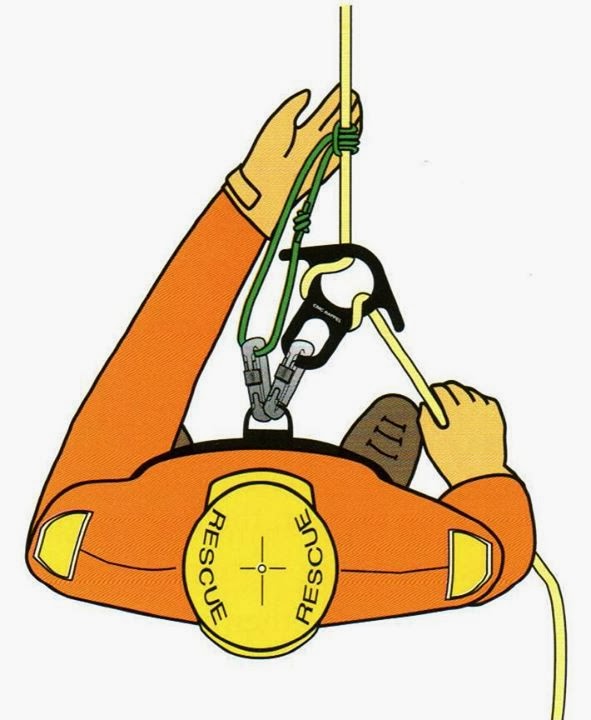 |
| The prusik-hitch self belay with a figure 8 rappel device. |
- Caution:
Like all prusik-hitch-based systems, the self belay is dependent on
selecting prusik material that will grip the rope reliably when the
rappeller lets go of the hitch.
It also depends on the rappeller letting go of the prusik hitch. The loss of control of the rappel may cause the falling person to panic and the instinctive reaction is to grab the rope. If that hand is tending the prusik hitch, it is possible to pull the knot down the rope with you.
The correct response is to let go of the prusik hitch, allowing it to grab the rope. It has been CMC's experience in classes that the student will most often let go of the prusik hitch if the rappel begins to move too fast and heat builds up in the hand.
One solution to this issue, according to CMC, is a simple tactical rappel setup.
How to handle a stuck prusik hitch
It the self belay prusik hitch activates, either intentionally or unexpectedly, the rescuer's weight will have to be unloaded from the prusik hitch to loosen it.
A hard pull on the prusik hitch with both hands may get it to slide.
An extra prusik or ascender, along with an etrier or foot sling, can be used to take the rescuer's weight off the hitch in order to free it. Attach the etrier above the decender and stand up as discussed below.
What if you do not have extra gear, or you are not strong enough to free the prusik hitch by brute force?
CMC recommends the following procedure to free a stuck prusik, and it recommends you practice it with someone experienced with this technique, and that you do it close to the ground until you are proficient with it.

- Lock off the descender with a single wrap.
- Form a bight in the rope below the descender and put one foot in the bight with the knee bent.
- Bring the rope from the bight over the top of the descender, still bending the knee, and then wrap the rope two more times around the descender for a total of three wraps.
- Stand up in the bight to take the weight off of the prusik hitch. Lossen the hitch and slide it down.
- Sit back down in the harness. Unlock the descender, making sure not to load the prusik hitch.
Wednesday, December 18, 2013

EMT RipShears—The World's Fastest Trauma Shears

Four tools in one:
- Trauma shear
- Safety knife
- Reflex hammer
- O2 Wrench
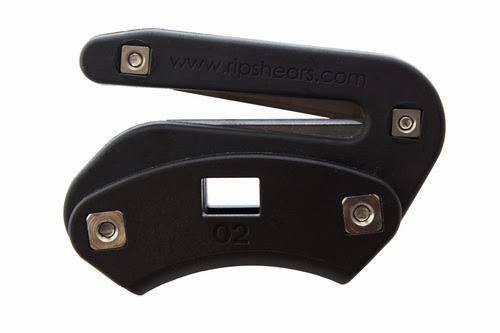 According to the manufacturer, RipShears can slice through turnout gear, combat boots, leather jackets, denim, wet suits, CBR gear, bandages, sport wraps, plastic packaging, seat belts and much more.
The Ripshears Firefly model glows in the dark, and the Ripper unit is sold separately for those wishing to upgrade a pair of standard, 7.25-inch trauma shears.
Learn more about RipSears here.
Source: Soldier Systems Daily
The Combat Man-Trackers of the Vietnam War

Pete Peterson was recruited for the combat trackers while recovering at a U.S. military hospital in Japan during the fall of 1968. It wasn’t a hard sell for the two trackers who shared his hospital ward. Peterson had lost several friends in a firefight with the North Vietnamese while he was sidelined with an ankle injury. “The tracker’s job was to hunt down the enemy,” says Peterson, who had been serving with an infantry company. “I liked the idea of that. I wanted some payback.”Source: Institute of Visual Tracking & Tactical Acuity
When he returned to Vietnam, Peterson joined one of the elite Army teams charged with finding an enemy known for melting into the jungle, gathering intelligence, and searching for missing U.S. soldiers and pilots. Although the secrecy surrounding the combat trackers has meant their accomplishments were all but lost to history, they were so successful that the North Vietnamese army put a bounty on the five-man teams and their Labrador retrievers. That bounty was a point of pride with the trackers, part of what made the work both arduous and gratifying. Read more here...
Tuesday, December 17, 2013
Amazing video footage of heli rescue of crane operator trapped by raging construction fire in Kingston, Ontario
Amazing video footage of heli rescue of crane operator trapped by raging construction fire in Kingston, Ontario.


Controlling bleeding is often more important than establishing an airway—but what is the best method to do so?
Controlling bleeding is often more important than establishing an airway—but what is the best method to do so? An alternative to the tourniquet: the iTClamp50.


Monday, December 16, 2013


The humble, yet versatile, Figure Eight Device.
"The humble yet versatile Figure Eight. I've seen this gadget used in many different configurations over the years. Without explanation or endorsement, here are a few." [Emphasis added] —Richard Delaney, Administrator, Rope Rescue Page.

Subscribe to:
Posts (Atom)